

News and Highlights
Sustainable Agroforestry: A Key to Climate-Smart Agriculture
The world runs on coffee. However, the high demand for coffee beans has devastating environmental, social, and economic impacts on farming communities. Agroforestry emerges as a promising solution, offering a symbiotic approach that enhances soil health, carbon sequestration, and water conservation while maintaining agricultural productivity and preserving local ecosystems.
A recent Indonesia-India exchange program as part of our India-U.S. Triangular Development Partnership (TriDeP) Activity highlights the potential for international cooperation in this critical area.
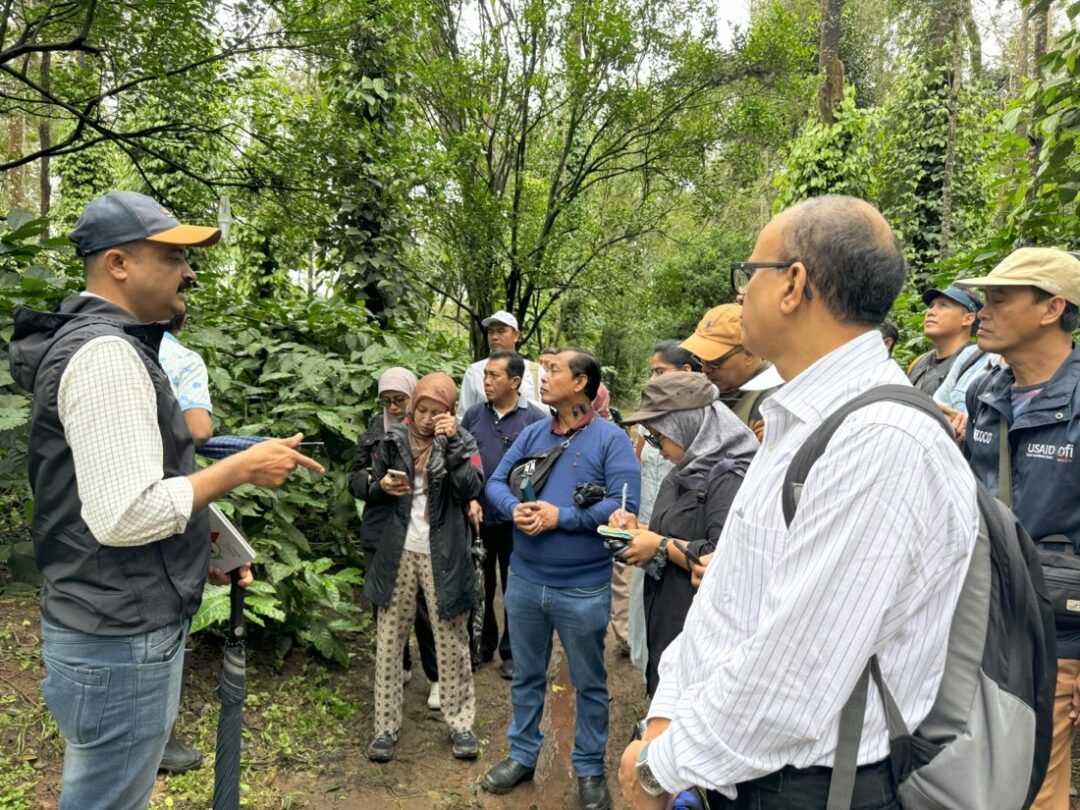
From July 28 to August 6, a 22-member Indonesian delegation visited India for our 10-day Learning Exchange program on Sustainable Agroforestry in coffee-growing areas. With technical support from the Indian Centers of Excellence, namely the National Institute of Agriculture Extension Management (MANAGE), and the Coffee Board of India, the program brought together key stakeholders to enhance knowledge and address environmental and economic challenges in the coffee industry.
Why It Matters
- Climate resilience: Agroforestry systems help mitigate extreme weather events, such as the devastating coffee leaf rust outbreak that affected Mesoamerica in 2013.
- Small farmer dependence: 99% of Indonesia’s coffee farmers operate on less than 1 hectare, emphasizing the need for sustainable, small-scale solutions.
- Environmental protection: India’s shade-grown coffee prevents erosion and supports biodiversity.
- Growth potential: India’s coffee production has seen remarkable growth, increasing from 10,000 MT in 1920-21 to 348,000 MT in 2021-22, demonstrating the long-term viability of sustainable practices.
The Path Forward
- Establishment of joint research initiatives and educational exchange programs
- Implementation of pilot programs for visiting practitioners and scientists
- Development of specialized training curricula for extension officials
- Exploration of adapting India’s Coffee Board model to the Indonesian context
Implemented by The Asia Foundation, TriDeP is a partnership between the U.S. and India, co-created by the Ministry of External Affairs, Government of India, and USAID. TriDeP focuses on facilitating policy dialogue, sharing practical experiences, and sustainable results in the three priority sectors: Climate Smart Agriculture (CSA), Disaster-Risk Reduction (DRR), and Renewable Energy (RE).