

Program
Boosting Cybersecurity Across Asia and the Pacific
Small enterprises going digital are vulnerable to growing cyber threats. The APAC Cybersecurity Fund provides them with practical tools and skills to operate securely in the digital economy.

Digital adoption is accelerating across Asia and the Pacific, and so are cyber threats, undermining the security, growth, and resilience of small enterprises. They are increasingly in need of the tools and training to protect their businesses.
The APAC Cybersecurity Fund (ACF) is an initiative by The Asia Foundation designed to build accessible and sustainable cybersecurity ecosystems across 13 countries. Supported by Google.org, Google’s philanthropic arm, ACF equips small businesses and organizations with practical knowledge and tools to navigate the digital economy safely and confidently. The initiative also strengthens the cybersecurity workforce, expands access to technical support, and contributes to a more resilient regional cybersecurity ecosystem.
Impact
Individuals strengthened their cybersecurity knowledge
Participants across 13 countries have received practical guidance to recognize online threats, protect their information, and adopt safer digital practices.
Organizations equipped to improve their cyber resilience
Micro and small businesses, nonprofits, and social enterprises have gained the knowledge and tools needed to reduce digital risks and operate more securely.
Cyber clinics established at higher education institutions
University-based clinics are expanding access to practical cybersecurity assistance for businesses, organizations, and underserved communities.
Students mobilized through the cyber clinic network
Gained hands-on experience while providing cybersecurity awareness, assessments, and support to local organizations and communities.
Key Partners



Other partners include universities, business associations, national institutions, government agencies, and civil society organizations.
APPROACH
The APAC Cybersecurity Fund advances digital resilience through three interconnected areas: cyber hygiene training, university-based cyber clinics, and policy research and dialogue.
Cyber hygiene training
Working through a network of local partners, the program delivers practical and accessible cybersecurity training to micro and small businesses, nonprofits, and social enterprises. Participants learn to recognize common cyber threats, protect their digital accounts and information, respond to incidents, and adopt safer practices across their organizations.
Cyber clinics
The program supports the development of the Asia-Pacific Chapter of the Consortium of Cybersecurity Clinics, a global network of university-based clinics. Through these clinics, students apply their technical knowledge by providing cybersecurity awareness, assessments, and practical support to businesses and communities.
This model expands access to cybersecurity assistance while giving students hands-on experience and helping prepare the region’s next generation of cybersecurity professionals.
Research and policy engagement
In partnership with Google.org, Protect.ngo, and Global Cyber Alliance, the program generates evidence on the cybersecurity challenges for micro and small businesses and other underserved organizations. Research, knowledge exchange, and policy dialogue help national and regional stakeholders identify gaps, share effective approaches, and strengthen cybersecurity policies and support systems.
Geographic Focus
Australia, Bangladesh, India, Indonesia, Japan, South Korea, Malaysia, Pakistan, the Philippines, Singapore, Sri Lanka, Thailand, and Vietnam

Featured Publication
From Vulnerability to Resilience: Cybersecurity Challenges for MSMEs
This report analyzes the cybersecurity landscape for MSMEs across 12 APAC countries and examines how the pandemic has shaped these threats. It also assesses the risks for NPOs and NGOs.
Countries
In Bangladesh, the program combines large-scale cyber hygiene training with university-based cybersecurity support. Working with SAJIDA Foundation, it delivers in-person and online learning that helps entrepreneurs identify risks and adopt safer digital practices. More than 63,850 people have received training to date.
A complementary cybersecurity clinic at North South University prepares students in digital hygiene, risk assessment, and incident response. Students then provide pro bono support to small businesses and nonprofits, strengthening organizational data protection while building Bangladesh’s future cybersecurity workforce.
Korea serves as both a training hub and a foundation for wider regional cybersecurity collaboration. Flexible online learning and practical training help entrepreneurs—particularly those from small businesses—understand cyber risks, strengthen foundational skills, and protect increasingly digital operations.
More than 1,000 people representing more than 700 MSMEs have participated. Women entrepreneurs and people from other underrepresented groups account for 52 percent of trainees, while improvements to the self-paced learning model have increased course completion.
In India, the program operates at scale while connecting practical training with institutional capacity building, research, and policy engagement. Working with the Foundation for MSME Clusters, CUTS International, CyberPeace Foundation, and Asia Pacific Consulting and Advisory, it delivers locally relevant training through trusted business and community networks.
Cyber hygiene training has reached more than 80,000 MSMEs—half of them women-led-across 20 states and 70 districts, using six regional languages. Partnerships with more than 75 business membership organizations help extend digital safety guidance through established local institutions. The program also equips policymakers and elected representatives to address cybersecurity, artificial intelligence risks, digital fraud, and cyber resilience, while generating evidence on the barriers that prevent small businesses from adopting stronger protections.
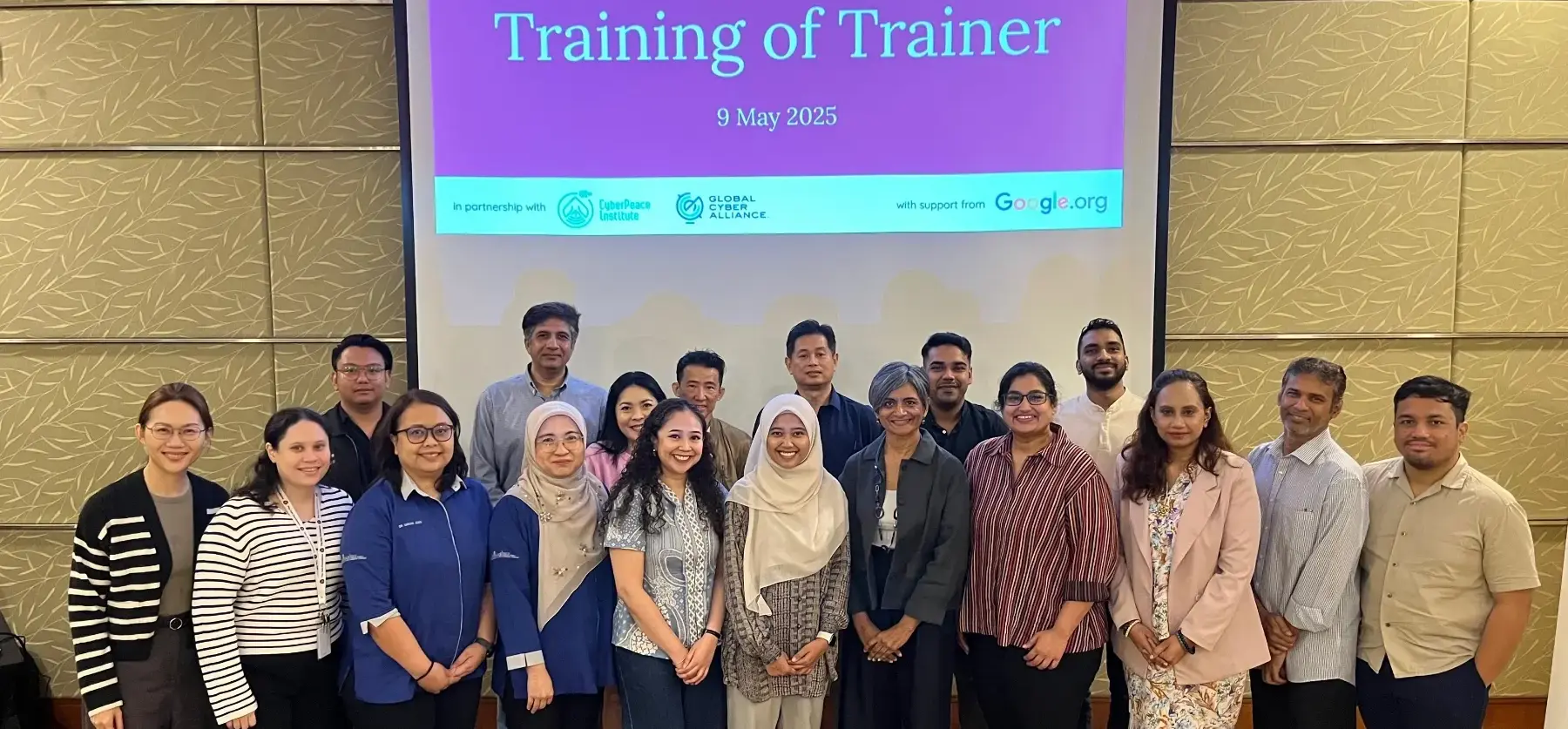
In Malaysia, the program focuses on making cybersecurity accessible to micro and small businesses, nonprofits, social enterprises, and underserved communities that increasingly rely on digital tools but often lack practical protection against online threats. After a yearlong effort to localize and curate the curriculum, TAF launched cyber hygiene training in Malaysia with a training-of-trainers workshop in 2025.
The training aims to equip five local partners to reach 30,000 individuals across Malaysia, with the goal of supporting these participants to recognize phishing scams, data breaches, device hijacking, and other everyday cyber risks. By framing cybersecurity as a shared responsibility and a foundation for economic resilience, the program helps smaller organizations and community members participate more safely and confidently in Malaysia’s digital economy.
Pakistan is pioneering a university-led clinic model that addresses two needs simultaneously: practical cybersecurity support for underserved organizations and hands-on workforce preparation for students. Working with universities, industry partners, and local organizations, the clinics train students to apply their skills in real-world settings. Students support MSMEs and nonprofits with cybersecurity needs, helping participating organizations strengthen their resilience while developing a pipeline of professionals equipped to respond to Pakistan’s evolving digital economy.
In the Philippines, the program combines broad-based community training with a new university clinic model. A network of local partners delivers practical cyber hygiene training to MSMEs, public institutions, and civil society organizations, helping them recognize threats and operate more securely online.
To date, the program has equipped 60,000 Filipinos representing 30,000 organizations with cybersecurity skills. A pilot clinic with De La Salle University complements this reach by preparing students to provide practical support to organizations and pursue careers in cybersecurity.
Sri Lanka combines cyber hygiene training, locally grounded research, and university-based clinics to strengthen both immediate protection and the wider cybersecurity ecosystem. Training is expected to reach 13,200 people, including participants from 8,000 MSMEs, with practical guidance on safeguards such as digital asset inventories, regular data backups, and two-factor authentication.
Research helps identify policy and regulatory gaps affecting smaller organizations. Cybersecurity clinics piloted with Uva Wellassa University and the Sri Lanka Institute of Information Technology provide additional support while giving students opportunities to apply their skills in practice.
In Vietnam, the program focuses on translating a strong national cybersecurity policy framework into practical protection for MSMEs and household businesses. Its work responds to the everyday risks businesses encounter as they adopt e-commerce, digital payments, social media sales, and platform-based services-including phishing, fake websites, data leaks, and online fraud.
The program treats cybersecurity as a business resilience issue rather than solely a technical one. Training, research, policy dialogue, cybersecurity clinics, and ecosystem partnerships are used to develop simpler business guidance, proportionate compliance pathways, and more accessible support. The program also works to embed cyber readiness within existing MSME systems, including business training, registration, finance, and credit-linked services.