

Program
Equipping Women Workers with Advanced Skills
We help women garment workers in Bangladesh build skills and access services and support to adapt to technological and environmental change in the industry.
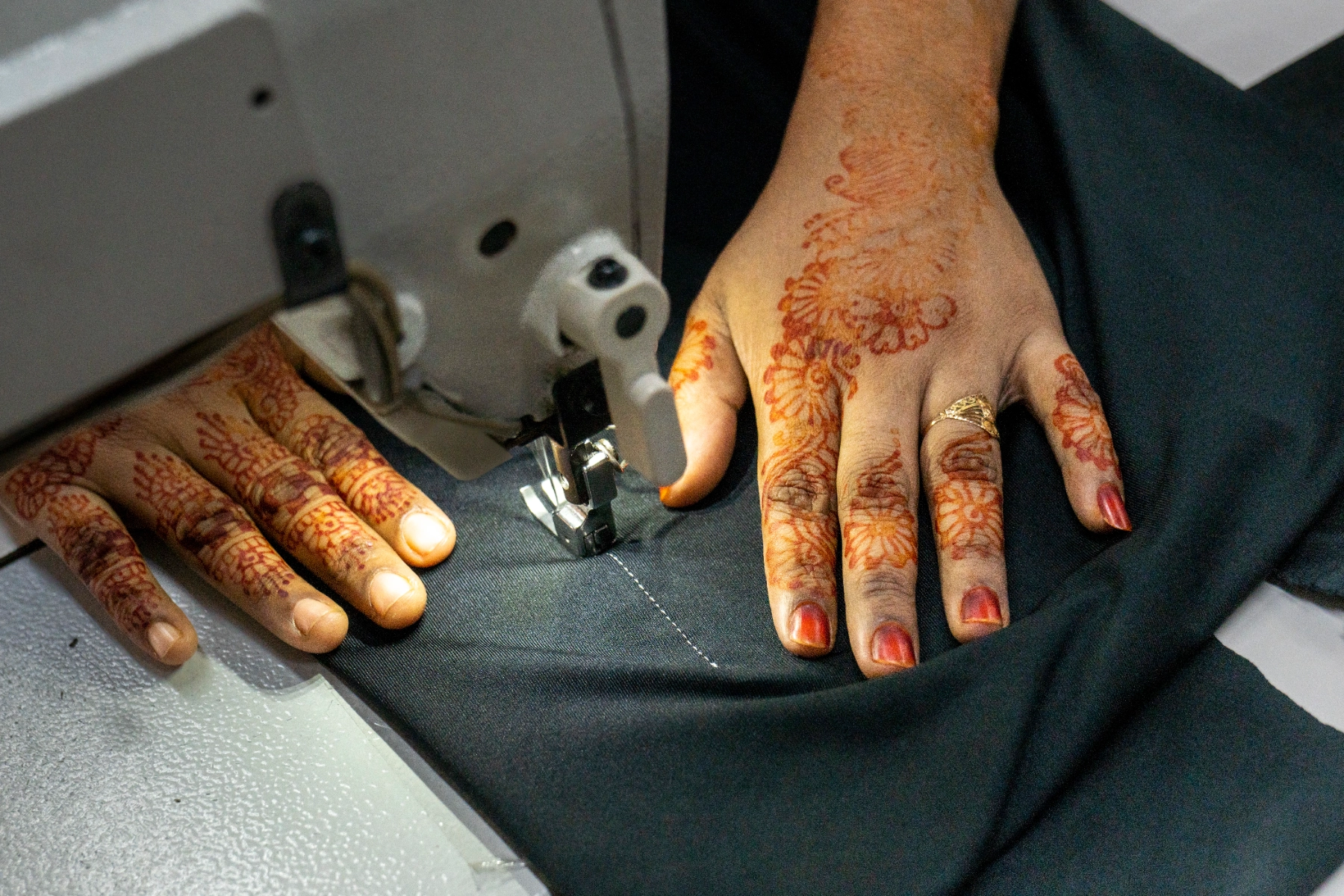
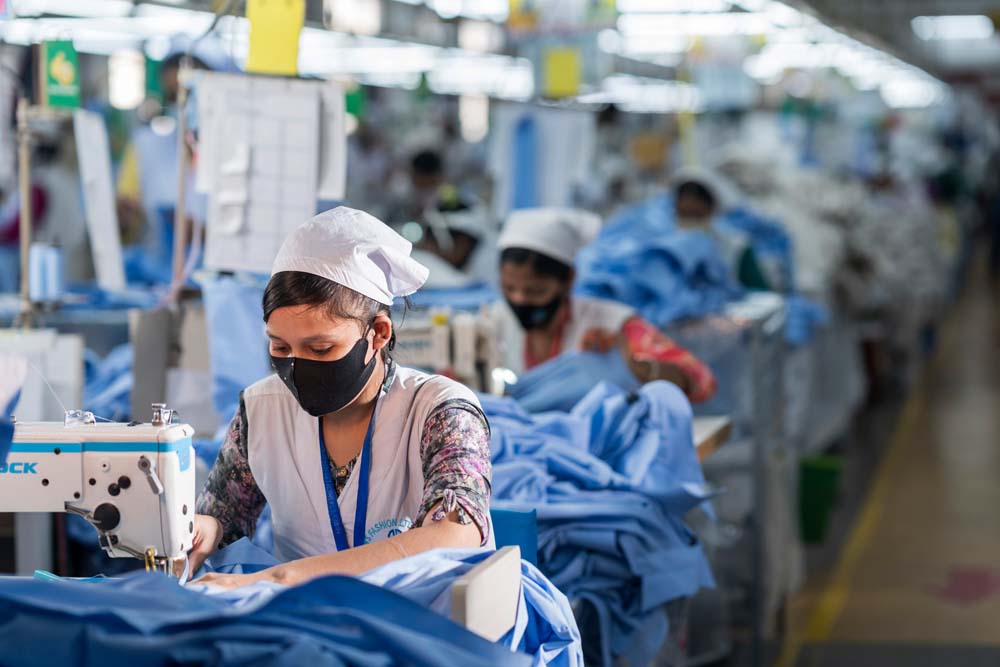
Bangladesh’s garment industry is being reshaped by automation, environmental pressures, and evolving global markets. Women make up much of the industry’s workforce but remain concentrated in lower-paid and lower-skilled positions, with limited opportunities for advancement.
With funding from the H&M Foundation, the Oporajita program supports women workers to build skills, strengthen resilience, and prepare for a changing future of work. By aligning industry, civil society, and policymakers, the program connects worker development with wider sector reform. It works through three pathways, combining skills development, workplace and community support systems, and policy engagement to help increase opportunity in the garment sector and make it more resilient and environmentally responsive.
Impact
Featured Video
The Meaning of Oporajita
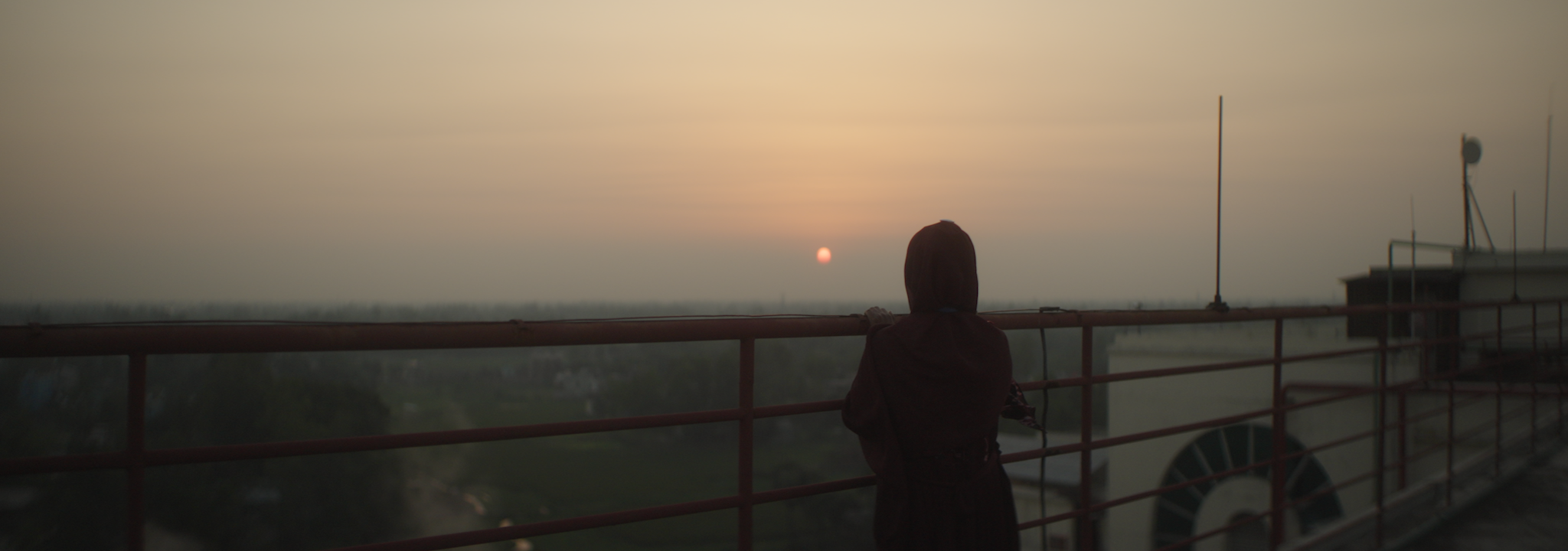
In June 2026, The Meaning of Oporajita, an eight-minute branded film produced for H&M Foundation by BBC StoryWorks Commercial Productions debuted to a global audience.
APPROACH
Oporajita uses a collective-impact model that aligns partners around a shared vision, coordinated interventions, and common measures of progress. Partners include CARE, Save the Children, WaterAid, Circular Apparel Innovation Factory, Centre for Communication Action Bangladesh, LightCastle Partners, UNCDF, iDE, Build Bangladesh, Swisscontact, and Shimmy Technologies. The program works across four mutually reinforcing areas:
Building an enabling environment
Oporajita addresses barriers that limit women’s ability to participate and advance in the workforce, including restrictive social norms and limited access to childcare, social protection, financial services, water, sanitation, and other essential support systems. It also builds wider understanding of what a fair industry transition requires.
Developing future-ready skills
The program helps women garment workers build technical and transferable skills aligned with increasingly automated, low-carbon, and circular production. It also supports women who are out of work to develop skills and pursue new opportunities.
Supporting environmental mitigation and industry competitiveness
Oporajita works with factories, entrepreneurs, and policymakers to advance energy efficiency, renewable energy use, circular business practices, and other low-carbon solutions. These efforts link technical and environmental improvements with workforce readiness, business resilience, and sector competitiveness..
Strengthening environmental resilience
Extreme weather and environment-related risks already affect workers’ health, income, and living conditions. The program strengthens access to clean water and sanitation, financial protection, workplace support, and community services that help women workers and their families manage environmental shocks.
Oporajita
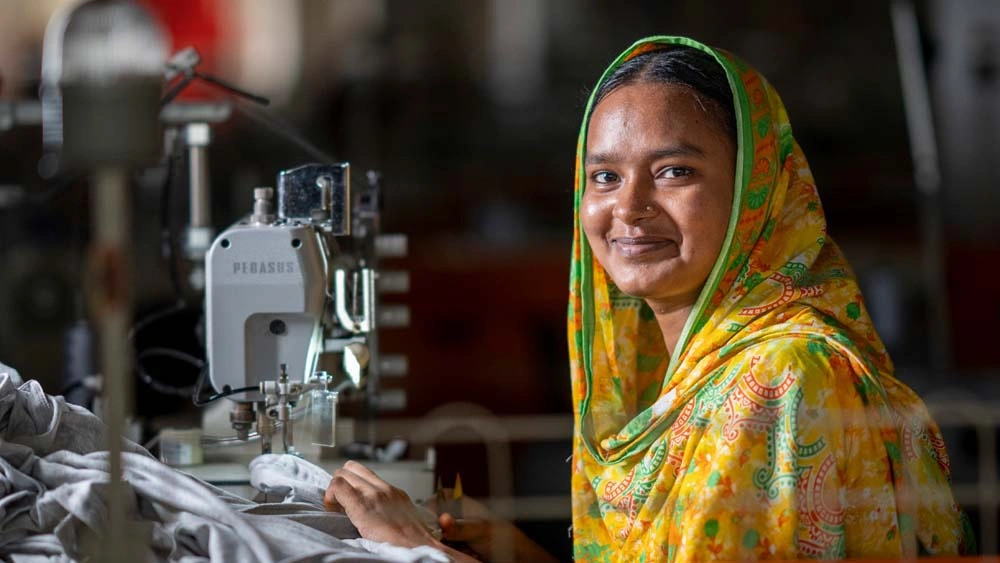
Oporajita—meaning “undefeated” in Bengali—places women garment workers at the center of the industry’s transition. The program helps women develop skills for emerging roles, strengthen their financial resilience, manage environmental shocks, and access services that support their participation and progression in the workforce.